Umbrian extra virgin olive oil is often associated with herbaceous aromas and a bold flavor, with notes of bitterness and spiciness. This is a useful description to start with, but it’s not enough to capture the full story of an entire region’s oils: the olive varieties, the growing region, and the processing methods at the mill can all yield very different results.
In addition to Moraiolo, Frantoio, and Leccino, Umbria also cultivates varieties associated with more specific regions. One of these is Nostrale di Rigali, found in the northeastern Apennines. Knowing about them helps you choose olive oil more thoughtfully, without relying solely on the origin or the appearance of the bottle.
? There is no single flavor profile for Umbrian olive oil. You may find some oils that are more delicate and others that are more intense, with notes of grass, almonds, artichokes, or tomatoes. Their intensity varies depending on the cultivar and the conditions under which the olives are grown, harvested, and processed.
Three terms are often used to describe an oil:
Bitter and spicy are positive attributes of the oil, not defects to be avoided. Their intensity, however, is not enough on its own to determine how good a product is.
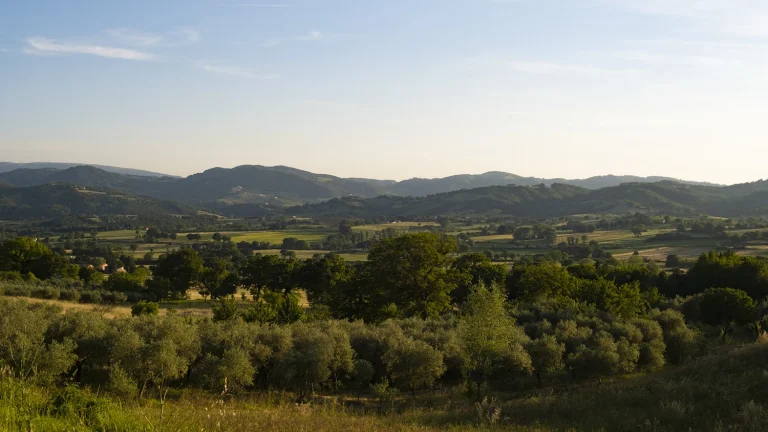
When discussing Umbria, one must consider a variety of environments. The growing region influences the conditions under which olive trees thrive: exposure, soil, water availability, and temperatures all contribute to the final result, along with the variety and the producer’s choices.
In the Apennine region, the relationship between olive trees and the climate is particularly evident. The cold hardiness of the Nostrale di Rigali variety, for example, helps explain its presence in these environments. The region is also reflected in the varieties that have been cultivated and preserved there over time.
In the case of Maximus, the page dedicated to the land and the olive groves also tells the story of the restoration of abandoned groves. This is a tangible aspect of the connection to the land: continuing to cultivate means preserving the olive-growing landscape and the work necessary to maintain it.
A cultivar is a cultivated variety of olive tree. Moraiolo, Frantoio, and Leccino are among the most common in Umbria, but they are also found in other regions: their name alone does not prove a bottle’s Umbrian origin.
The Moraiolo is often associated with oils that have a bold character, featuring distinct bitter and spicy notes. It is an important variety in Umbrian olive cultivation, used both on its own and in combination with other olives.
Frantoio olives can produce aromatic oils with vegetal notes and a distinct fruitiness. They are widespread in many Italian regions and are used in numerous blends, where they contribute to the oil’s overall profile.
Leccino is often associated with a more delicate flavor profile than Moraiolo. This does not mean that its oil is completely free of bitterness or pungency: these flavors may also be present.
These are general guidelines, not identical descriptions for every bottle. To learn about a specific oil, you need to consult its product sheet and, above all, taste it.
The region’s heritage also includes varieties such as San Felice, Dolce Agogia, and Nostrale di Rigali. Limiting ourselves to the three best-known names would leave out part of Umbria’s olive-growing diversity.
The Nostrale di Rigali takes its name from Rigali, in the Gualdo Tadino area. The Regional Agrobiodiversity Registry documents its distribution in the northeastern foothills of Umbria, particularly in the municipalities of Gualdo Tadino, Nocera Umbra, and Gubbio, as well as in other nearby municipalities.
The AMAP variety profile indicates very low sensitivity to cold and describes an oil with an intense herbaceous fruitiness, with possible notes of artichoke, almond, and tomato, accompanied by bitterness and pungency. This profile serves as a guide, without replacing the evaluation of individual oils and vintages.
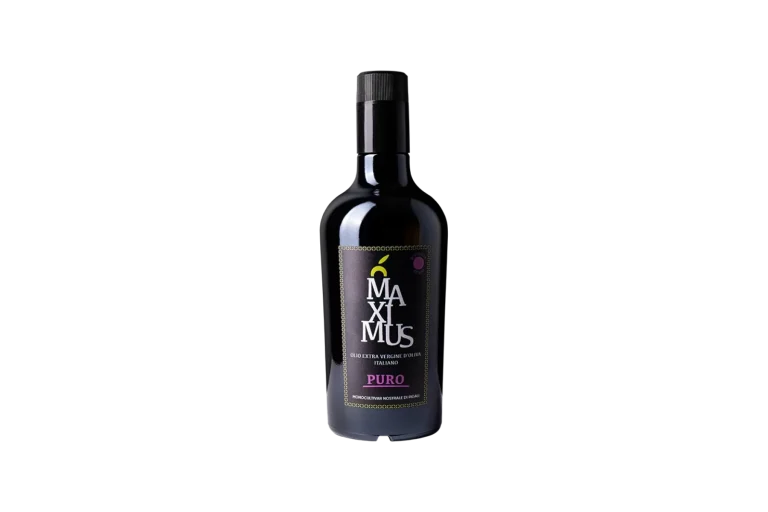
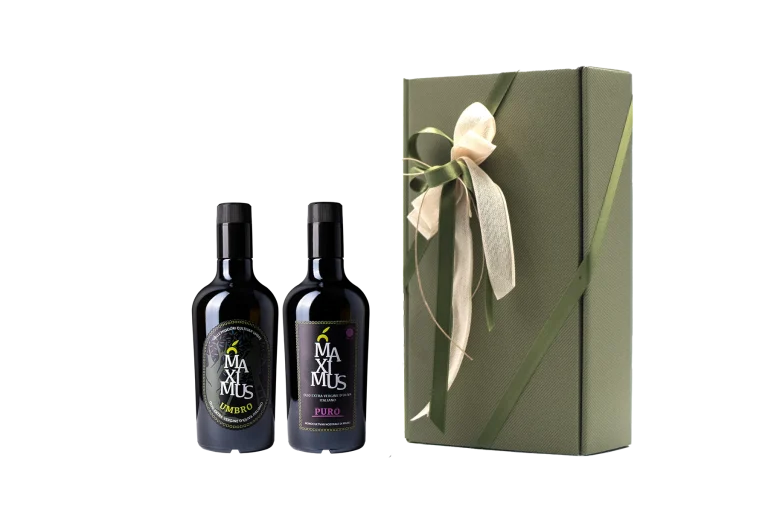
For Maximus, this cultivar plays a central role: Puro is a 100% Nostrale di Rigali monocultivar. The product description notes aromas of freshly cut grass and tomato leaves. It is a concrete example of how a local variety can be featured on its own, making it easier to explore its character in the glass.
To learn more about this variety, read the in-depth article on the history, characteristics, and flavor of Nostrale di Rigali.
A monocultivar , or monovarietal, oil is made from a single variety of olives. A blend, on the other hand, combines the contributions of different varieties. Neither choice automatically guarantees superior quality.
A single-origin coffee is a great way to get to know a particular variety. In a blend, the balance among the different components is also important.
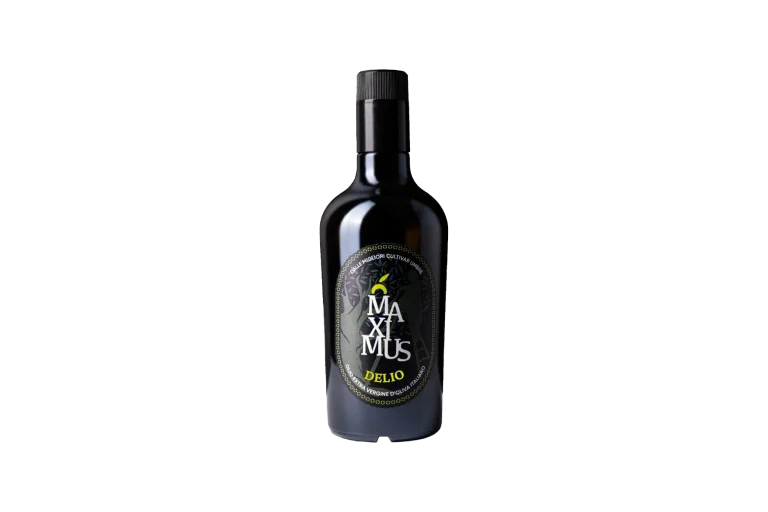
Alongside Puro, Maximus offers Delio, a blend of olive varieties grown in Umbria: Nostrale di Rigali, Moraiolo, Frantoio, and Leccino. The producer describes its herbaceous notes and the balance between bitterness and spiciness, without disclosing the proportions of the different cultivars.
Umbrian origin and the Umbria DOP designation are not the same thing. The DOP designation identifies an oil that meets specific specifications and is subject to quality controls throughout the supply chain. It does not automatically apply to every oil produced in the region.
The designation includes five geographical designations:
An olive oil can therefore originate in Umbria without being marketed as “Umbria DOP.” When looking for a certified bottle, you should check the designation on the label. When looking for a local olive oil, however, it’s important to know the origin of the olives and the supply chain.
Taste can help you get to know an oil, but it does not prove its geographical origin. A grassy aroma or an intense spiciness are not unique to Umbria.
To make a more informed choice, try answering these questions:
The company’s address in Umbria alone does not answer all these questions. The information on the label and in the product description should allow you to trace the oil’s journey; if anything is missing, it’s worth asking the producer.
For your first tasting at home, pour a small amount of oil into a clean shot glass, warm it slightly between your hands, and smell it. Then taste a small amount, paying attention to the aromas and sensations in your mouth.
A rancid smell, a musty odor, or a smell reminiscent of vinegar are different indicators than bitterness or pungency. The latter may be characteristics of a well-made oil; defective odors, on the other hand, require attention. Tasting at home helps you get to know the product, but it is no substitute for a professional evaluation.
A deep green color is not enough proof of quality. Even words like “authentic,” “traditional,” and “artisan” are only meaningful when accompanied by concrete information about the production process.
Pungency should not be confused with free acidity: the latter is a parameter measured through analysis and cannot be determined by tasting the oil.
Quality must be evaluated as a whole. The “extra virgin” category takes into account both chemical and sensory characteristics: neither the region of origin nor a single taste impression is sufficient to define it.
To get to know an oil, try it raw in simple dishes. Bread, legumes, and vegetables let you observe how the aromas and the perception of bitterness and spiciness change when paired with food.
As a pairing experiment, you can use a more intense oil with a legume soup or grilled vegetables, and a more delicate one with a mild-flavored dish. It’s not a strict rule: comparing small amounts is the best way to figure out what you prefer.
Once you’ve opened the bottle, reseal it tightly and store it away from light and heat, away from the stove. Air, light, and high temperatures can cause the oil to spoil; proper storage is essential even for a carefully selected oil.
No. The intensity varies depending on the cultivar, ripeness, and processing method. Some Umbrian olive oils are more delicate, while others are more intense: the region of origin does not define a single flavor profile.
No. It is associated with this area, but the Regional Register documents its presence in several municipalities in northeastern Umbria. The AMAP profile also notes its presence in the Marche region.
Not necessarily. The former allows you to explore a single variety; the latter combines different varieties. The choice depends on the desired profile, while quality requires an evaluation of the product.
No. Bitterness is a positive attribute recognized in the sensory analysis of virgin olive oils. It should be distinguished from defects such as rancidity or mold.
No. Tasting describes its profile and helps evaluate it, but it does not certify its geographical origin. To do that, you need information about its origin and the supply chain.
No. Umbria PDO is a designation with specific requirements and controls. Production in Umbria alone does not qualify a product for this certification.
Maximus
VAT Number 03863110544
Gualdo Tadino (PG)

Maximus
VAT Number 03863110544
Gualdo Tadino (PG)