Rigali’s Nostrale is an olive cultivar native to the Apennine region of Umbria. The name refers to Rigali, in the Gualdo Tadino area, and to an olive-growing tradition that has had to contend with the cold. It is also known as Rigalese.
To understand its value, it’s best to start with the regions where it’s grown, the characteristics of the fruit, and the sensory descriptions gathered over time. The variety is a starting point: the flavor of each oil also depends on the vintage, the harvest, and the processing.
This variety is used for oil production and is primarily found in the northeastern foothills of Umbria. The Regional Agrobiodiversity Registry documents its presence in Gualdo Tadino, Nocera Umbra, and Gubbio, as well as in Fossato di Vico, Sigillo, Costacciaro, and Scheggia e Pascelupo.
To describe it as “rare” therefore requires some clarification: it is a variety with a limited distribution, but one that is significant to the olive-growing heritage of its region. This does not mean that it consists of only a few isolated trees.
Its presence also extends beyond regional borders: the AMAP variety profile notes sporadic cultivation in the Marche region. “Umbra” reflects its connection to the region without implying geographical exclusivity.
To understand how it compares to other regional varieties, you can read the guideto Umbrian extra virgin olive oil, its characteristics, and cultivars.
Regional records describe an empirical selection process that has taken place over time in a cold environment: farmers have preserved and propagated plants suited to those conditions.
There is also a specific bibliographic reference. OleaDB lists a 1953 work by F. Francesconi devoted to Rigali’s “Nostrale” and its cold hardiness. This attests to the agronomic interest in the variety as early as the last century, though it does not indicate the date of its origin.
On March 12, 2014, the cultivar was entered in the Umbria Regional Agrobiodiversity Registry. Conservation efforts encompass both plants in the field and collections held by research institutions—a way to ensure that this varietal heritage remains available for the future.
Its good tolerance to cold helps explain its distribution in the Apennines. However, this should not be interpreted as a guarantee against all frosts: the variety, the plant’s condition, and weather events must always be considered together.
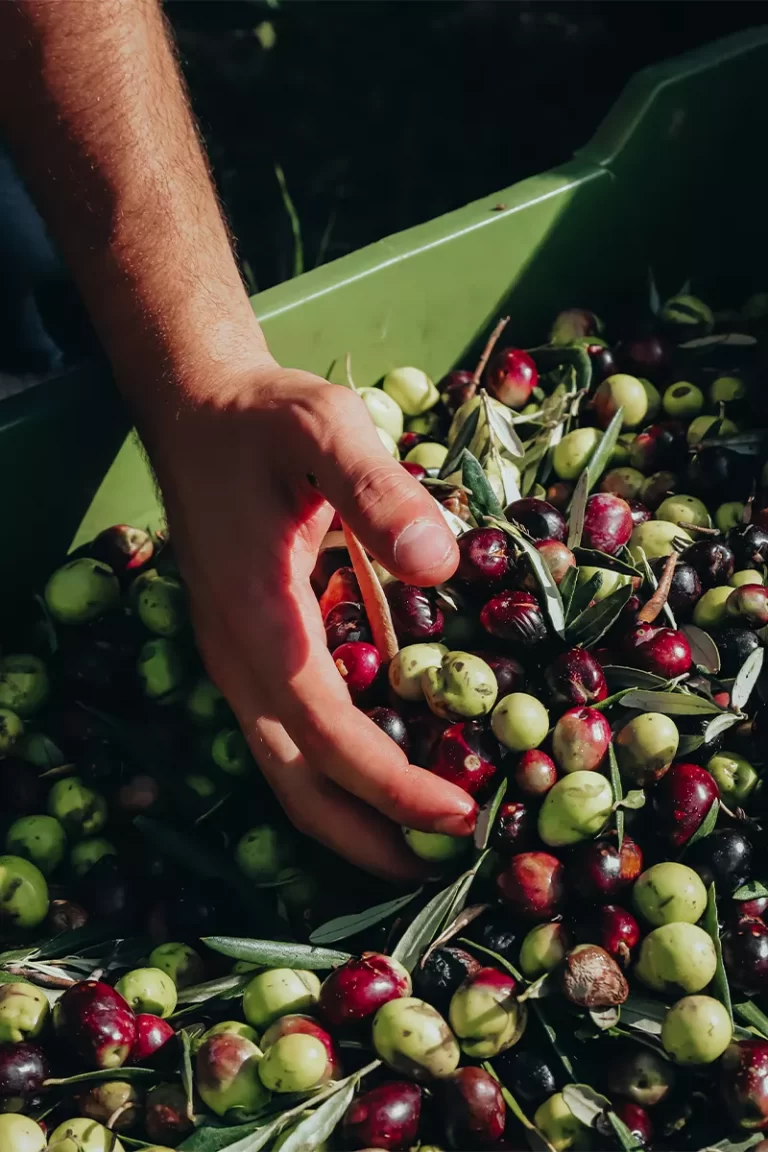
The AMAP profile for Rigali’s Nostrale variety describes the fruit as ovoid and fleshy, with a high pulp-to-pit ratio. As the fruit ripens, the skin changes from green to reddish-purple hues, eventually turning dark purple.
An interesting point is that oil accumulation and color change do not necessarily occur at the same rate. The data sheet indicates early oil accumulation and a later onset of veraison—that is, the change in color.
As the olives ripen, the firmness of the flesh and the fruit’s resistance to detachment decrease rapidly. Spontaneous olive drop can occur early and be significant; therefore, waiting until all the olives are dark is not a sufficient criterion.
AMAP indicates October as the approximate optimal harvest period. This is an agronomic guideline that should be adapted to the specific growing season and olive grove; it is not a fixed deadline applicable to every producer.
The database of single-variety olive oils describes a profile in which fruity, bitter, and spicy notes reach, on average, medium-to-high intensities. Aromatic notes include grass and leaves, artichoke, and fresh almond, with a more subtle hint of tomato.
These descriptors are derived from a set of samples. They are meant to guide the tasting experience, but they do not guarantee that every bottle will contain all the aromas in the same proportions. A Nostrale oil should be tasted for what it expresses in that specific harvest.
In the documented profile of this variety, bitterness and spiciness play a distinct role. If you’re looking for a very delicate oil, it’s worth keeping this in mind; if you appreciate vegetal notes and a bold flavor, these are elements worth exploring.
For a simple comparison, taste it first on its own and then with food. Note which flavors you recognize and how long they linger: you don’t need to identify every descriptor on the sheet to appreciate the differences.
Maximus’s connection to this variety is part of a family history deeply rooted in Rigali. On the page dedicated to the family, the company tells the story of Grandfather Delio, who was born at the foot of Mount Penna, and of the work carried on by his grandsons Mattia and Samuele.
The page on Maximus’s land and olive groves also describes the restoration of abandoned olive groves. This relationship with the local area is thus also fostered through the care of trees and land that are already part of the local landscape.
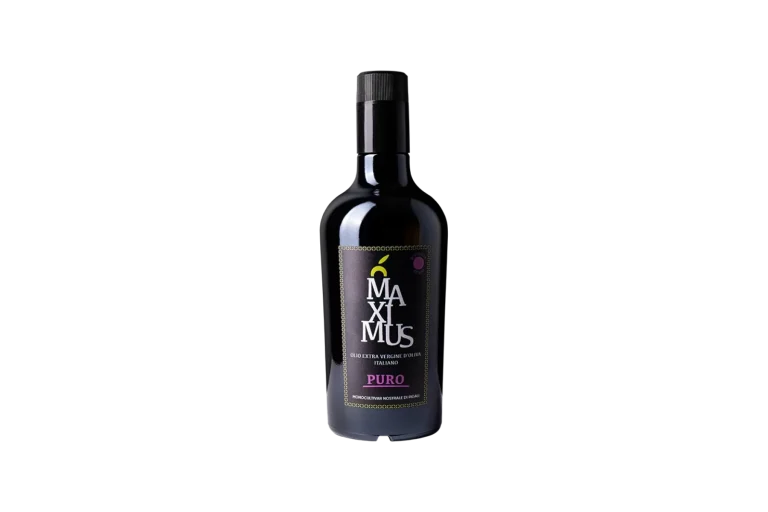
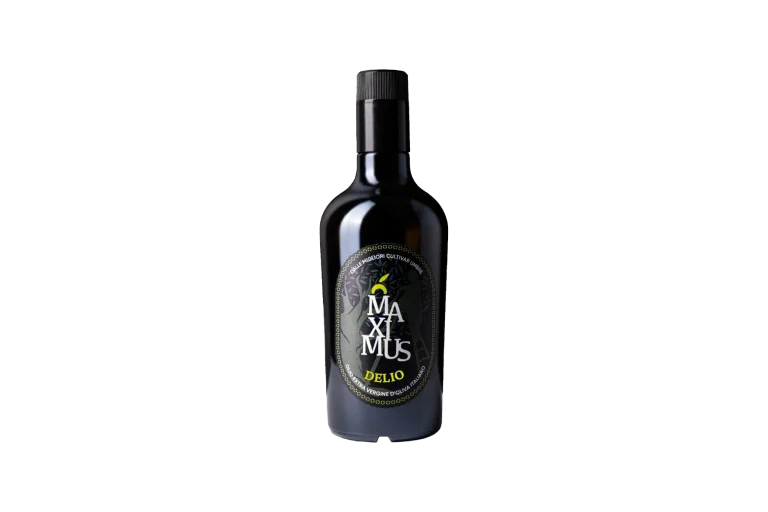
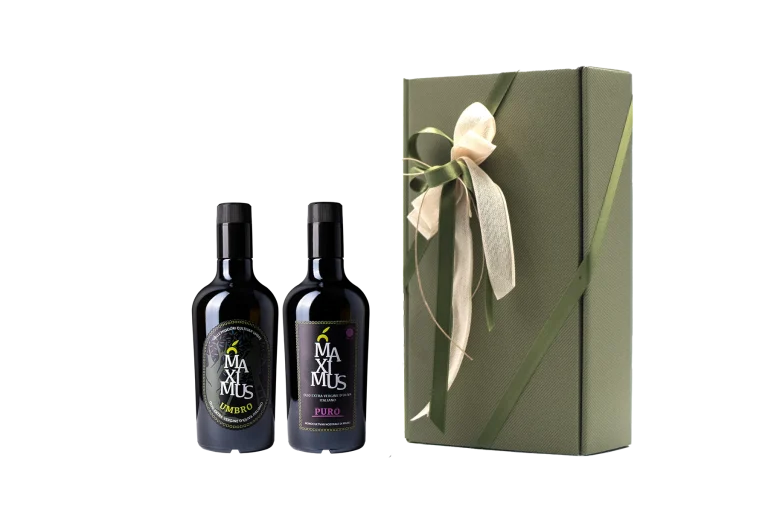
The Nostrale variety is incorporated into the company’s production in two ways: on its own in the “Puro” blend and together with other varieties in the “Delio” blend. These are production choices made by Maximus, distinct from the general characteristics of the cultivar.
According to the manufacturer, Puro di Olio Maximus is a 100% Nostrale di Rigali olive oil, produced from centuries-old olive trees. “Monocultivar” means that only one variety of olive is used; a blend, on the other hand, combines more than one variety.
According to Puro’s product description, the olives are harvested by hand before they are fully ripe. The company states that the olives undergo cold mechanical processing at a temperature not exceeding 20 °C, are filtered on the same day, and are stored in tanks under nitrogen.
These are specific instructions for this product: they do not necessarily describe the method used by everyone who grows Nostrale di Rigali.
According to Puro, Maximus is characterized by intense fruitiness, aromas of freshly cut grass and tomato leaves, and a gradually building, lingering spiciness. This description from the producer should be distinguished from the average profile of the variety listed in the databases.
The Slow Food Foundation lists Olio Maximus, in Gualdo Tadino, among the producers of the national Presidium dedicated to extra virgin olive oil from centuries-old olive trees, specifying the Nostrale di Rigali cultivar. The Puro product description also mentions the Presidium.
This recognition applies to that specific production operation and its associated protection process. It does not automatically extend to all oils produced from the same variety.
To get to know an oil with a herbaceous and bold flavor profile, start with dishes that have few ingredients. The most helpful tests are those where you can easily compare quantities and sensations.
These are tasting suggestions, not rules for the cultivar. The oil in each individual bottle and your personal preferences should be your guide when deciding how much to use.
Yes. Rigalese is one of the synonyms listed in the varietal documentation. The names Nostrale and Nostrana di Rigali are also used.
No. This variety can be used on its own or in combination with other olives. To distinguish between the two possibilities, check the ingredients listed by the manufacturer: the name of the cultivar mentioned in the description, by itself, does not prove that it is present at 100%.
No. In sensory descriptions, the tomato is an aromatic note perceived on the palate, not an ingredient. The same applies to grass, artichoke, or almond.
To learn about Rigali’s Nostrale is to associate a name with places, plants, and specific practices. The sources recount its history and recurring characteristics; tasting it then allows you to experience the oil produced by a specific producer in a particular vintage.
Maximus
VAT Number 03863110544
Gualdo Tadino (PG)

Maximus
VAT Number 03863110544
Gualdo Tadino (PG)